
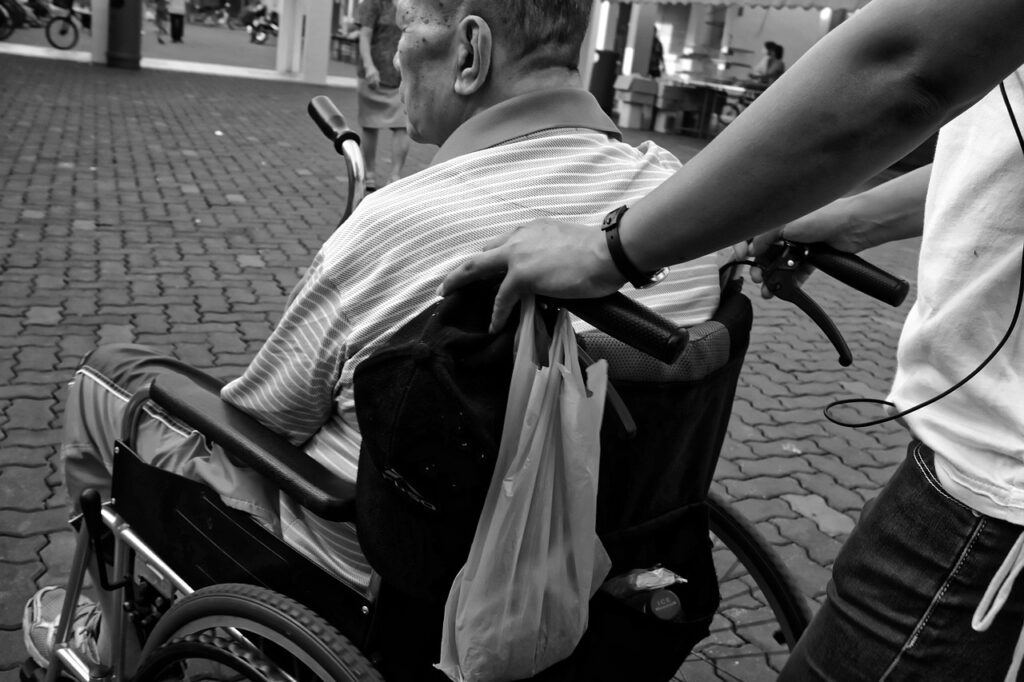
This Carers Rights Day—alongside The Action Group, MECOPP, EDG, FAIR, Care for Carers, The Eric Liddell Community, Edinburgh Young Carers, and Space @ The Broomhouse Hub—VOCAL has written to the Edinburgh Integration Joint Board (EIJB) to highlight the significant impact that proposed cuts to vital support services and new commissioning models will have on carers.
The joint letter follows a report published by Carers Scotland revealing that unpaid carers in Edinburgh save the city’s health and social care economy a staggering £1.047 billion a year—a figure which comes at a great personal and financial cost to carers.
Download a copy of the letter (PDF), which appears in full below:
By Email
To: Katharina Kasper, Chair of Edinburgh Integration Joint Board
Copied to: Edinburgh Cllrs, Edinburgh MSPs & MPs, EHSCP senior officers
21 November 2024
Dear Katharina,
We are writing on behalf of unpaid carers in Edinburgh to raise serious concerns about recent proposals to the Edinburgh Integration Joint Board (EIJB) to end the grants programme to third sector organisations, and proposals to establish a new Public Social Partnership (PSP) commissioning model with the sector.
Whilst we welcome the EIJB’s decision not to make in-year cuts to these grants, we are deeply concerned about the lack of consultation with carers and carer rganisations, and proper assessment of the impact that any cuts to services will have on unpaid carers—who represent the largest care ‘workforce’ in the city.
The lack of consultation has been exacerbated by the fact that there has been no carer representative recruited to the EIJB since March 2024 (a minimum membership requirement under the Public Bodies (Joint Working) (Scotland) Act 2014) and no involvement of a carer representative in the impact assessment undertaken for this report. Below we outline essential background information and our key asks in relation to the next steps of this consultation.
Edinburgh Carers
The 2022 Scottish census figures found that there are at least 48,000 unpaid carers in Edinburgh (a 27% increase on the 2011 census). Today it was revealed that unpaid carers save the Edinburgh health and social care economy a staggering £1.047 billion annually. This figure comes at a cost as carers are increasingly replacing gaps in statutory provision and compromising their own health and wellbeing. Evidence of this can be found in the recently published Edinburgh Health & Social Care Partnership (EHSCP) Carers Survey report.
The proposal to cut community grants follows recent reviews of care packages, for cost cutting reasons, and a reduction of statutory supports in the city. This has put pressure on unpaid carers to pick up the pieces and shoulder increased caring responsibilities, and causes distress to vulnerable people. In addition we also note that proposals to reduce or end the Holiday Hub provision in the city are currently being considered by Councillors at committee, which will further impact unpaid carers.
Impact of Cuts to Services
The EIJB grant programme includes £222k in funding for carer support services, but carers also depend heavily on the community groups funded through this programme, to complement the care they already provide (e.g. day care, befriending, therapeutic activities, food and exercise, condition specific supports). This support enables carers to balance their caring responsibilities with other commitments such as employment.
In addition to the grants programme, 37% of Carers (Scotland) Act 2016 funding is used to commission third sector organisations to support the EHSCP to meet their statutory duties under this legislation. This funding has not kept pace with the increase or complexity of carer support required, resulting in significant gaps between supply and demand. Many of the services and supports funded through the grants programme provide much needed additional resources to fill these gaps and support the EHSCP to meet their statutory duties. This preventative work, which supports unpaid carers to remain below substantial and critical thresholds, is outlined in the examples below:
VOCAL has seen an increase of 62% in the number of new carers accessing support over the last two years, with many at crisis point emotionally and financially. VOCAL’s counselling service, which is part-funded through the grants programme, has reported a growing number of carers presenting with high levels of distress and suicidal ideation, requiring specialist trauma counselling. Reducing support for carers who are at their most vulnerable, compromises their ability to continue caring with serious long-term consequences and financial costs.
MECOPP has observed a 70% increase in new carers over the last two years and receives funding through the grants programme for two key services that offer vital support to a substantial number of BME carers in the city. Any potential reduction in funding will have a detrimental impact to BME carers and would pose a serious risk of exacerbating the existing profound inequalities that BME carers currently endure, which is clearly inconsistent with Edinburgh’s Carer Strategy.
The Eric Liddell Community (ELC) has seen a 45% increase in new carers accessing their services over the last two years, benefitting from various classes supporting health and wellbeing. Many of the carers accessing this support rely on ELC’s grant funded Befriending Programme to provide replacement care to enable them to attend classes. The befriending service provides group and individual spaces which combats isolation and reinforces people’s sense of personhood. Without this service, many of the carers—who provide 24-hour unpaid care—would struggle to continue.
Care for Carers has seen a 57% increase in new carers accessing their services over the past two years, and the grants programme supports their information and short breaks work. As an unpaid workforce, enabling carers to take essential breaks from caring ensures they can continue in their caring role. This support is provided at often critical moments, where the inability to take a break can result in carer and potentially family breakdown. Demand already outstrips supply so the cost of reduced support will be significantly higher than any savings achieved through cuts to the grants.
FAIR (Family Advice and Information Resource) is funded by the grants programme to work with people with a learning disability (LD) and their carers. As babies and children with a LD live longer and more fulfilling lives, many will always require a certain level of support and care. FAIR has seen a 35% increase in carer support over the last two years, supporting carers who usually provide a lifetime of care for their son, daughter or sibling and as such, are much more likely to experience emotional, financial and practical challenges. Any disinvestment through cuts to grant funding would make FAIR’s future uncertain and have a significant impact on those caring for someone with a LD.
Proposed New PSP Model
We are extremely concerned about the newly proposed PSP model, outlined in the EIJB report, which combines carer and cared for commissioning into one PSP. This conflation of carer and cared for services has been proposed without any engagement with carer organisations and despite serious concerns raised by carer organisations, during the EIJB’s new strategic plan consultation, on the need for separation of carer and cared for needs. Merging carer and cared for commissioning into one PSP risks undermining the principles and statutory duties of the Carers Act and the clearly established differences between the needs of carers (as providers of care) and the needs of those they care for (as people who receive care). Merging both would reverse any progress made to date on the implementation of the Carers Act and ensure there is far less transparency and scrutiny of budgets.
The Scottish Government’s Carers Act guidance to local authorities provides clear direction on the delivery of support for carers and an explicit requirement to evidence carer need and benefit. This was reinforced by Maree Todd MSP’s letter to COSLA (27 February 2024) where she called for Carers Act resources to be ‘allocated in full to providing support for unpaid carers’. Services put in place following an assessment of an individual’s care needs may complement the care provided by unpaid carers, and enable them to sustain employment, but this is not carer support. Scottish Government guidance is very clear on these distinctions and how they relate to charging policies. A carer’s ability to manage and sustain their caring role will inevitably be influenced by the level of support available for the person they care for, but this interconnection is at an operational rather than commissioning level.
Our Key Asks
We welcome the proposal by Cllrs Pogson, Nicolson, Mumford, and Beal to hold clear and open discussions with the third sector as soon as possible to consider alternative proposals for the long-term future of third-sector funding. To aid these discussions, we urgently request:
- a timetable for consultation with carers and carer organisations on alternative proposals
- collaborative working with the EVOC Carers Forum to identify a sustainable model of carer representation on the EIJB (the Chair of the forum recognises how difficult it has been to recruit carers; she has explored a range of options and would welcome your assistance)
- a review of the proposed PSP model to include a separate PSP for commissioning of carers services
We remain committed to supporting and working in partnership with the EIJB to address the significant financial challenges ahead, whilst also ensuring the health, employment and wellbeing of the growing number of unpaid carers in Edinburgh is not compromised or negatively impacted as a result of taking on a caring role.
We look forward to hearing from you.
Yours sincerely,
Rosemary McLoughlin
Chief Executive, VOCAL
Jo Kirby
Development Manager, The Action Group
Margaret Chiwanza
Chief Executive, MECOPP
Maureen Martin
Chief Executive, EDG and Chair of EVOC Carers Forum
Kimberley Swan
Chief Executive, FAIR
Ruth MacLennan
Chief Executive, Care for Carers
John MacMillan
Chief Executive, The Eric Liddell Community
Margaret Murphy
Chief Executive, Edinburgh Young Carers Project
Neil Hay
Chief Executive, Space @ The Broomhouse Hub